
Laravel 9 REST API with Passport Authentication Tutorial
https://www.itsolutionstuff.com/post/laravel-9-rest-api-with-passport-authentication-tutorialexample.html
Hello Dev,
This tutorial shows you laravel 9 rest api with passport. you will learn laravel 9 passport api tutorial. This article goes in detailed on laravel 9 rest api authentication. it's a simple example of the laravel 9 passport oauth2 example. You just need to some steps to do laravel 9 passport authentication.
Rest API is must be used when you are working with a mobile application. when your application is preferred for web apps and mobile apps then you must have to create API for your mobile development.
However, Laravel provides an easy way to create API. if you have authentication in your mobile app then you can easily do it using a passport. Laravel 9 Passport provides a way to create auth token for validating users.
If you also want to create a rest API for your mobile application then you can follow this tutorial for how to create rest API step by step with laravel 9. If you are new then don't worry about that I wrote the tutorial step by step.
Follow bellow few steps to create a restful API example in the laravel 9 app.
Step 1: Install Laravel 9
This is optional; however, if you have not created the laravel app, then you may go ahead and execute the below command:
Step 2: Install Passport
In this step we need to install passport via the Composer package manager, so one your terminal and fire bellow command:
After successfully install package, we require to get default migration for create new passport tables in our database. so let's run bellow command.
Next, we need to install a passport using a command, Using passport:install command, will create token keys for security. So let's run bellow command:
Read Also: Laravel 9 Authentication using Jetstream Tutorial
Step 3: Passport Configuration
In this step, we have to configuration on three place model, service provider, and auth config file. So you have to just follow changes on that file.
In model we added HasApiTokens class of Passport,
In auth.php, we added api auth configuration.
app/Models/User.php
config/auth.php
Step 4: Add Product Table and Model
next, we require to create migration for posts table using Laravel 9 php artisan command, so first fire bellow command:
After this command you will find one file in following path database/migrations and you have to put bellow code in your migration file for create products table.
After create migration we need to run above migration by following command:
After create "products" table you should create Product model for products, so first create file in this path app/Models/Product.php and put bellow content in item.php file:
app/Models/Product.php
Step 5: Create API Routes
In this step, we will create api routes. Laravel provide api.php file for write web services route. So, let's add new route on that file.
routes/api.php
Step 6: Create Controller Files
in next step, now we have create new controller as BaseController, ProductController and RegisterController, i created new folder "API" in Controllers folder because we will make alone APIs controller, So let's create both controller:
app/Http/Controllers/API/BaseController.php

app/Http/Controllers/API/RegisterController.php
app/Http/Controllers/API/ProductController.php
Step 7: Create Eloquent API Resources
This is a very important step of creating rest api in laravel 9. you can use eloquent api resources with api. it will helps you to make same response layout of your model object. we used in ProductController file. now we have to create it using following command:
Now there created new file with new folder on following path:
app/Http/Resources/ProductResource.php
Run Laravel App:
All the required steps have been done, now you have to type the given below command and hit enter to run the Laravel app:
make sure in details api we will use following headers as listed bellow:
Read Also: Laravel 9 Scout Full Text Search Tutorial
Here is Routes URL with Verb:
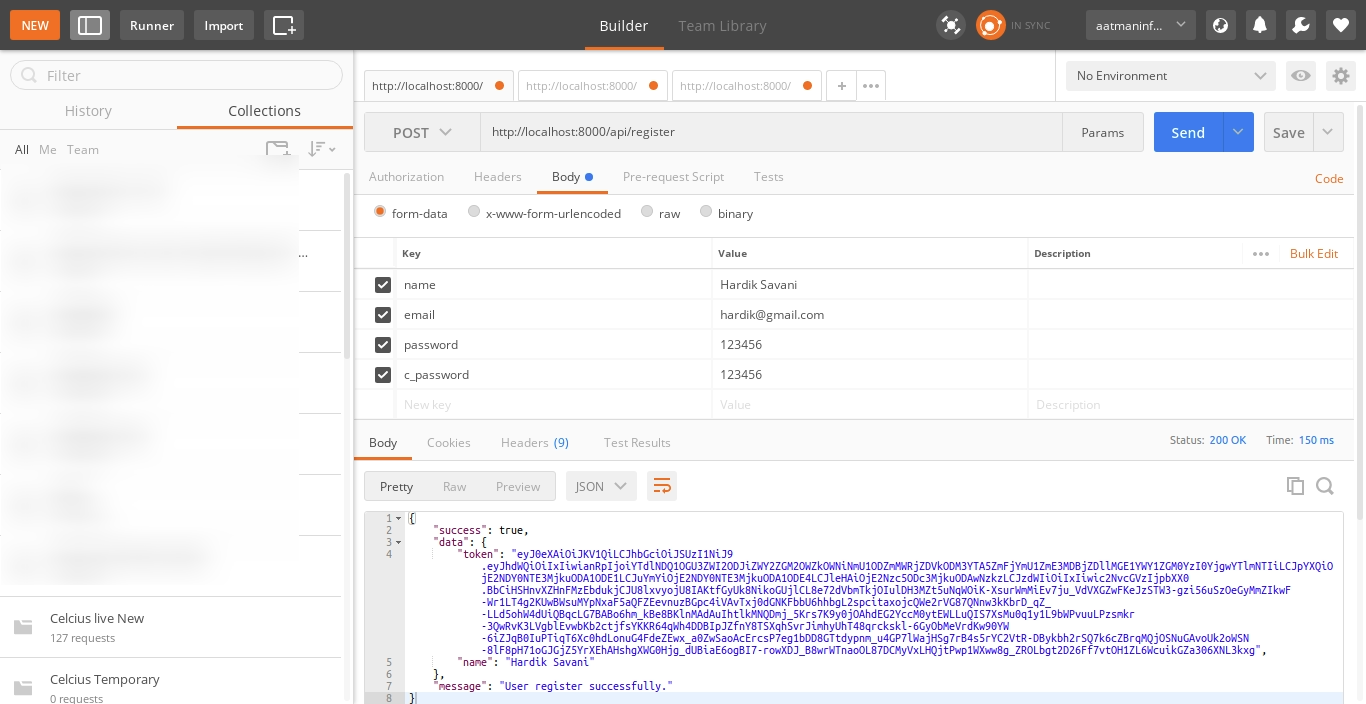
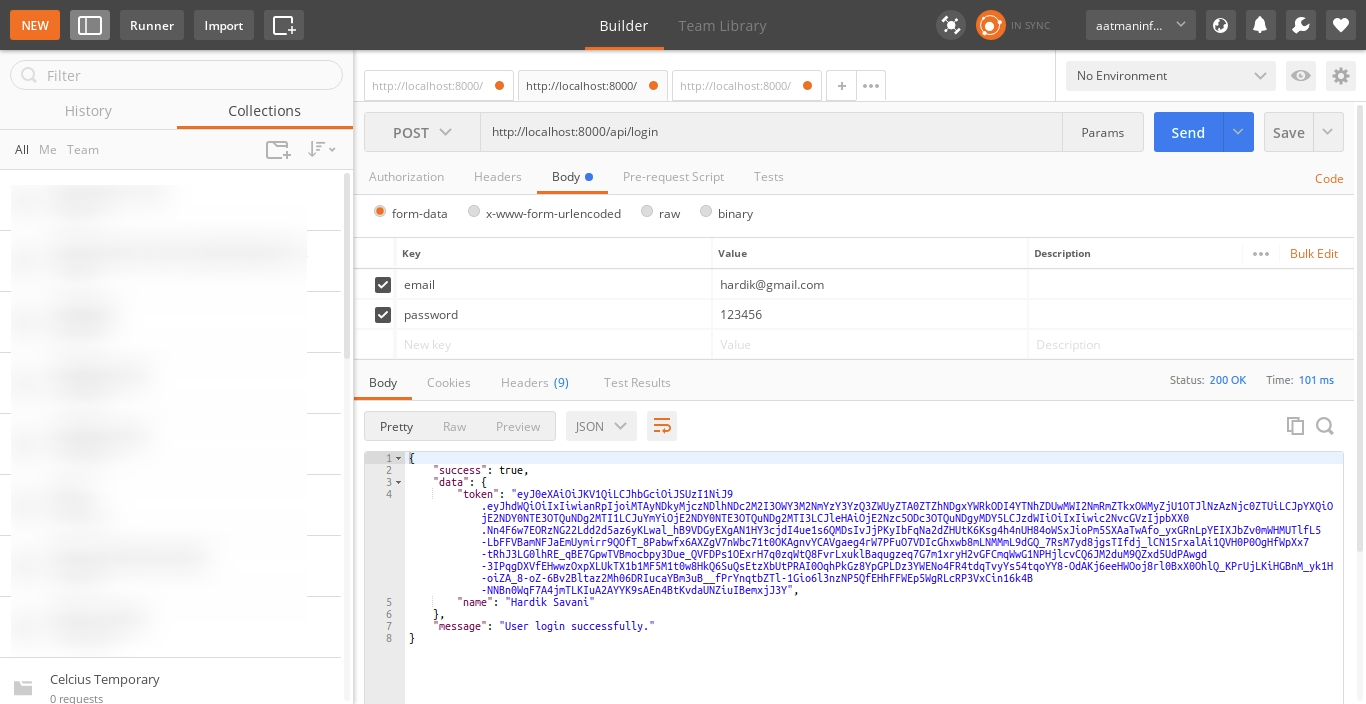
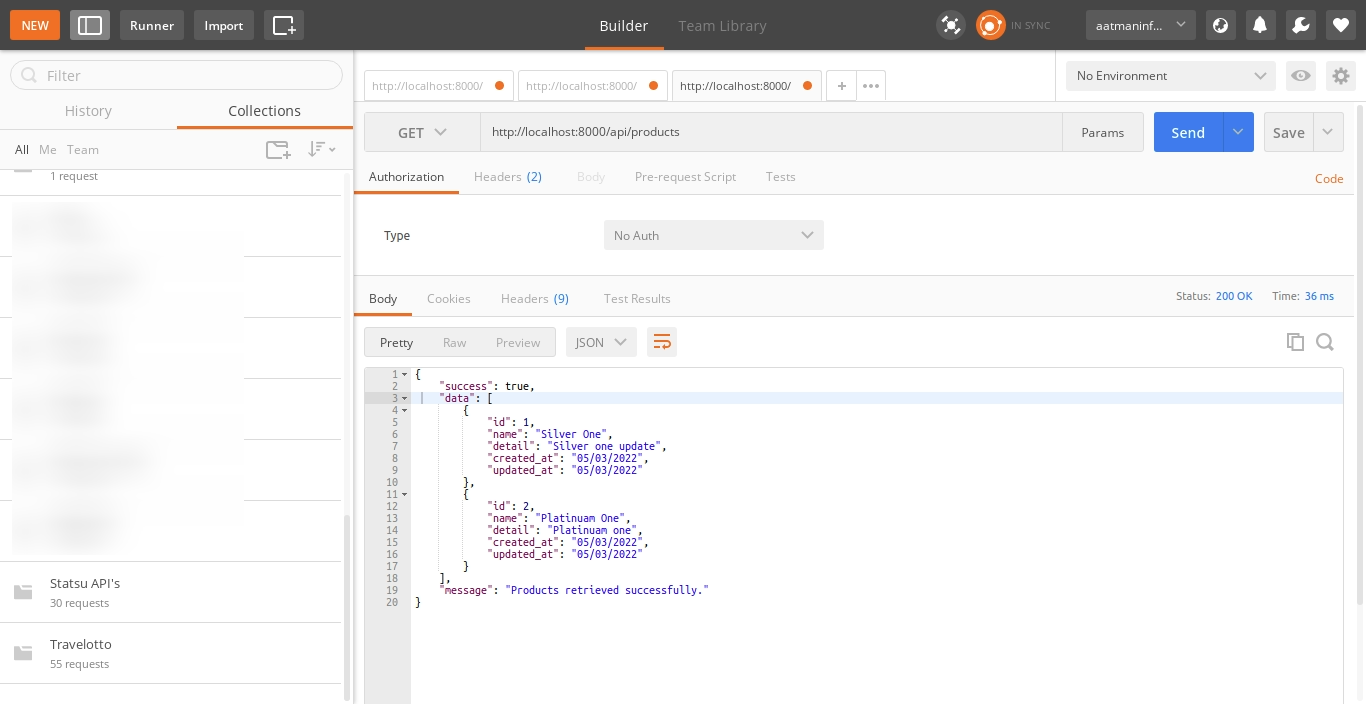
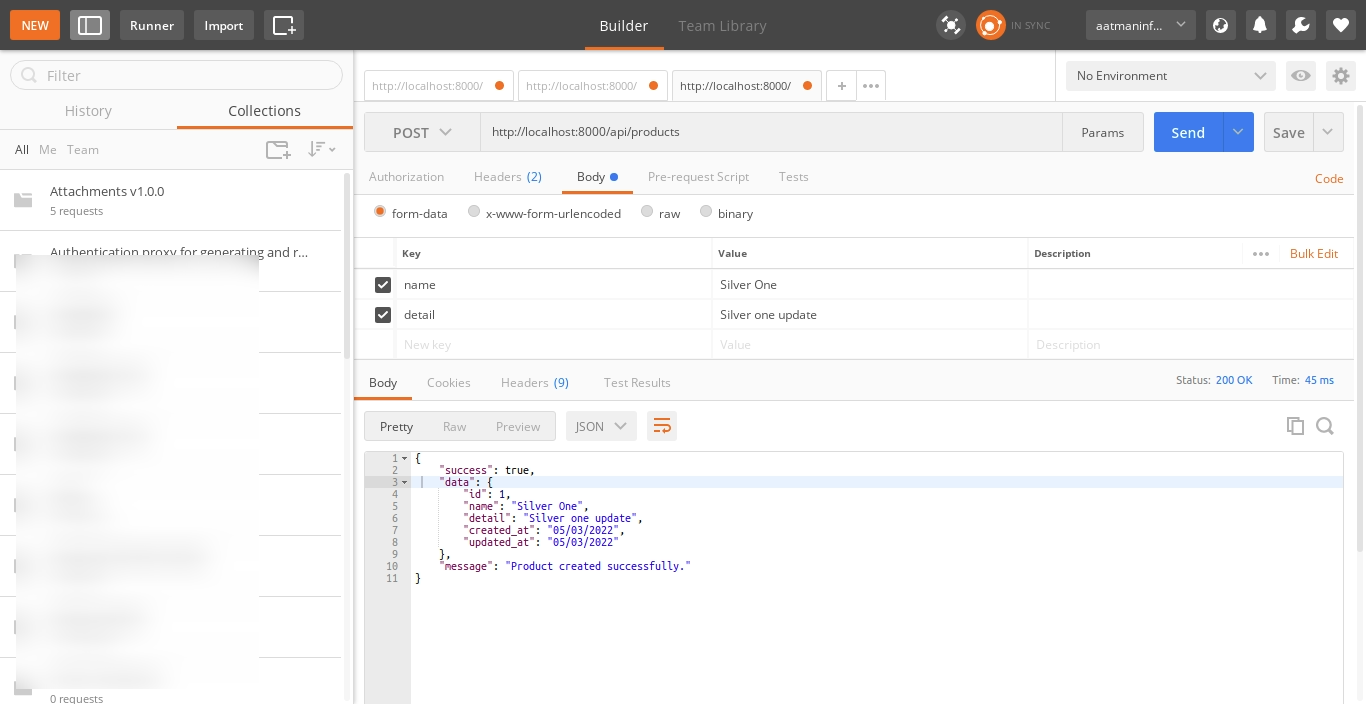
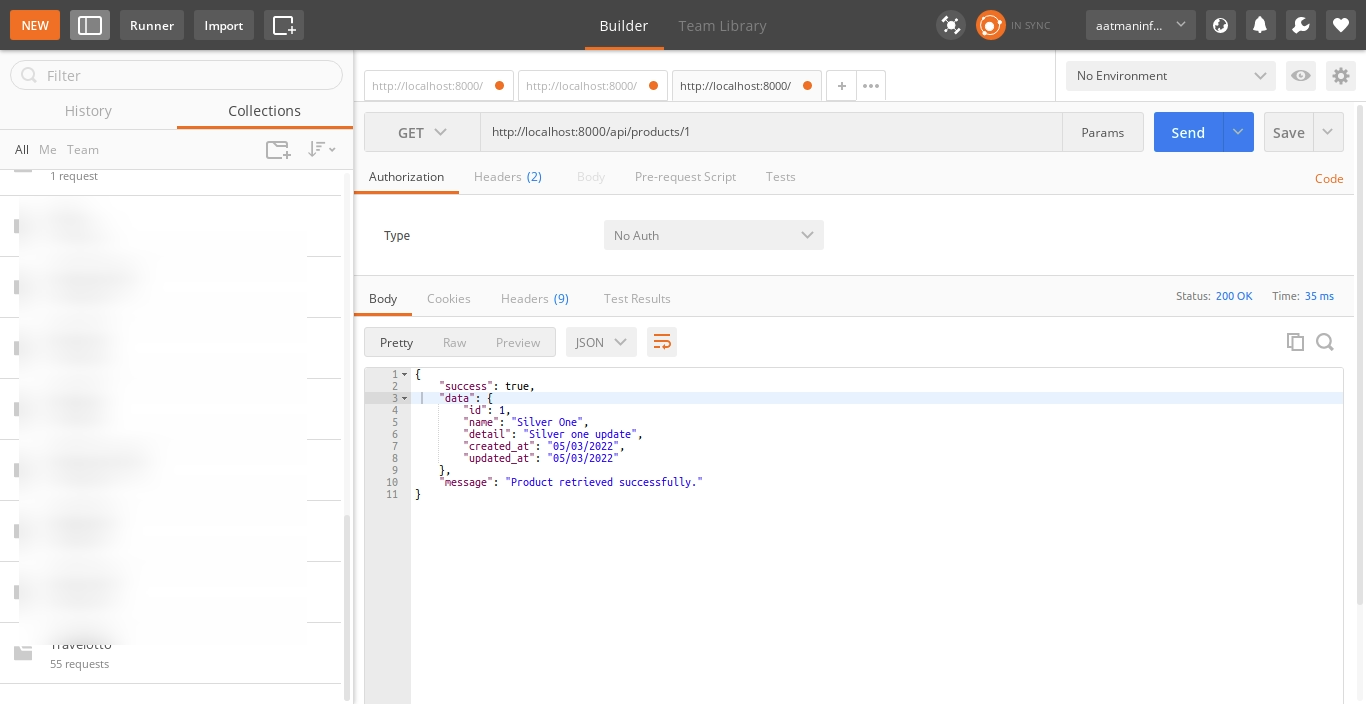
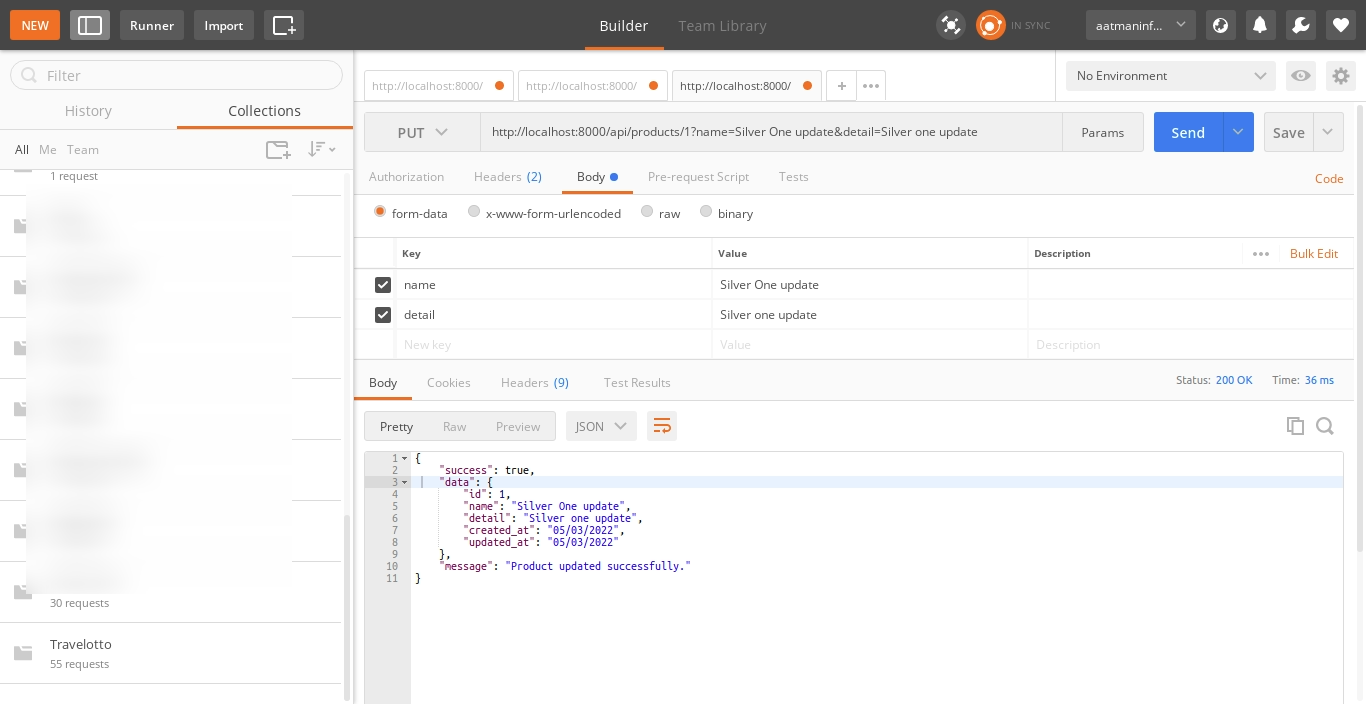
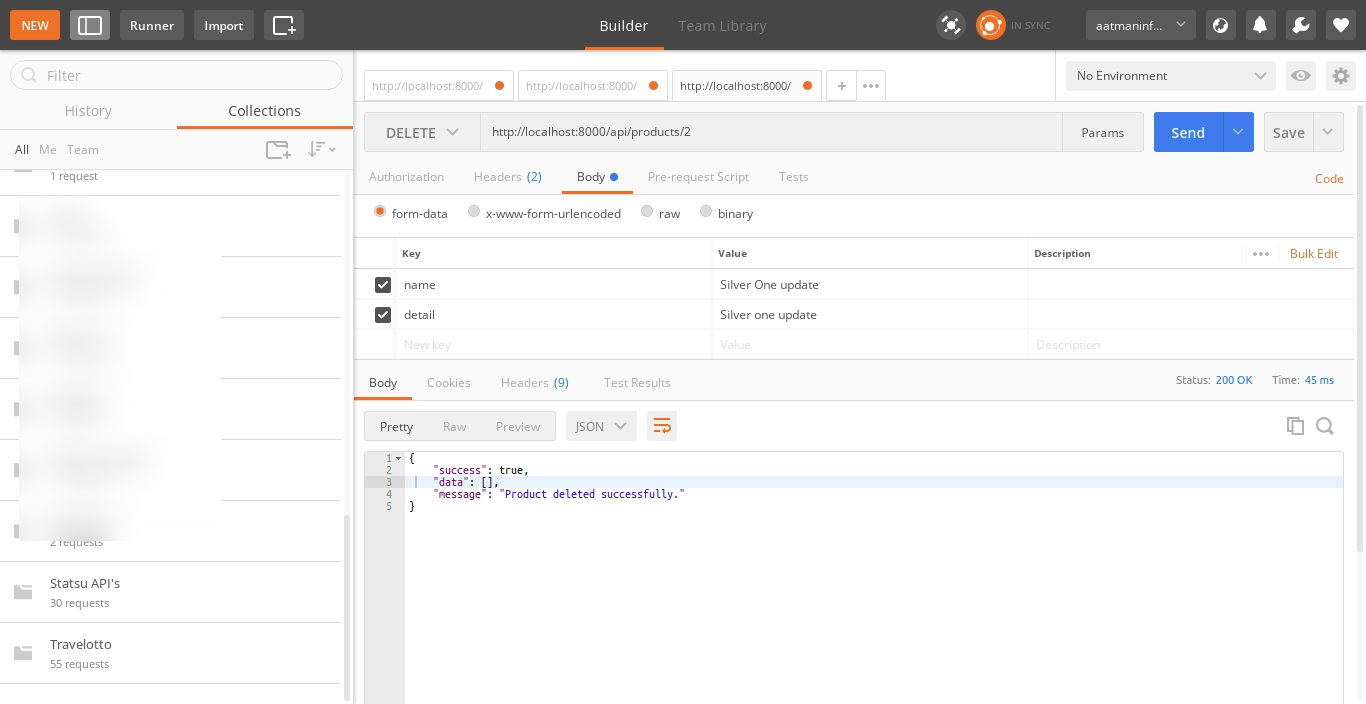
Now simply you can run above listed url like as bellow screen shot:
1) Register API: Verb:GET, URL:http://localhost:8000/api/register
2) Login API: Verb:GET, URL:http://localhost:8000/api/login
3) Product List API: Verb:GET, URL:http://localhost:8000/api/products
4) Product Create API: Verb:POST, URL:http://localhost:8000/api/products
5) Product Show API: Verb:GET, URL:http://localhost:8000/api/products/{id}
6) Product Update API: Verb:PUT, URL:http://localhost:8000/api/products/{id}
7) Product Delete API: Verb:DELETE, URL:http://localhost:8000/api/products/{id}
You can download code from git: Download Code from Github
I hope it can help you...
Last updated